
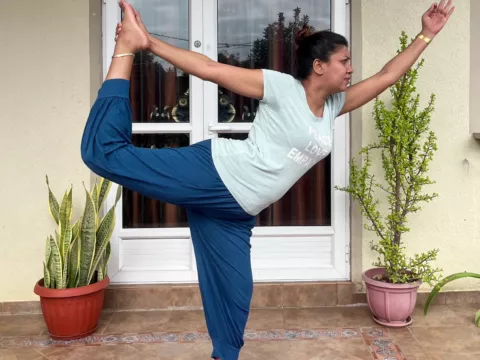
Yoga or Meditation for Stress: How to Choose
Both are popular on busy days, but they feel different and suit different people. A practical comparison to help you...

Telling yourself to “just relax” when your mind is racing at 11pm rarely works, because an unguided mind tends to wander back to whatever it was already thinking about, not a lack of trying. Guided meditation gives your attention somewhere else to go.
Sitting in silence and trying to clear your mind is genuinely difficult, especially for beginners, and it isn’t necessary. Guided meditation gives your attention somewhere specific to go (a voice, a breath count, a body scan), which is far easier to follow than an empty instruction to “stop thinking.”
Usually: lying down, a calm guiding voice, and a focus point, often the breath, or a slow scan of attention through the body. No posture requirements, no experience needed. Sessions built for the evening tend to be slower-paced and quieter toward the end than meditation aimed at daytime focus.
Guided meditation doesn’t guarantee you’ll fall asleep the moment it ends. Like most practices, it is something you build with repetition, not a one-time fix, and it is not medical care. If sleep is a lasting problem, speak to a health professional.
At Arna Holistic Wellness, Mindfulness Meditation sessions are built around this kind of gentle, guided awareness of breath and sensation: a practical starting point if you want to wind down in the evening.
Share the wellness wisdom with your friends and community.
Both are popular on busy days, but they feel different and suit different people. A practical comparison to help you...
Meditation, yoga, sound bath, breathwork: four different starting points. A quick way to figure out which one actually...