What’s Behind a Sound Bath? A Simple Explanation
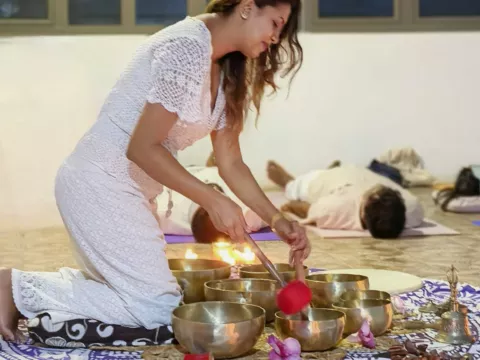
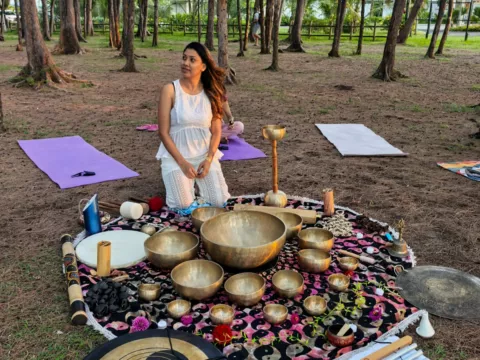
A sound bath is a guided rest built around sound, often from Tibetan singing bowls. Here’s what a session looks like.
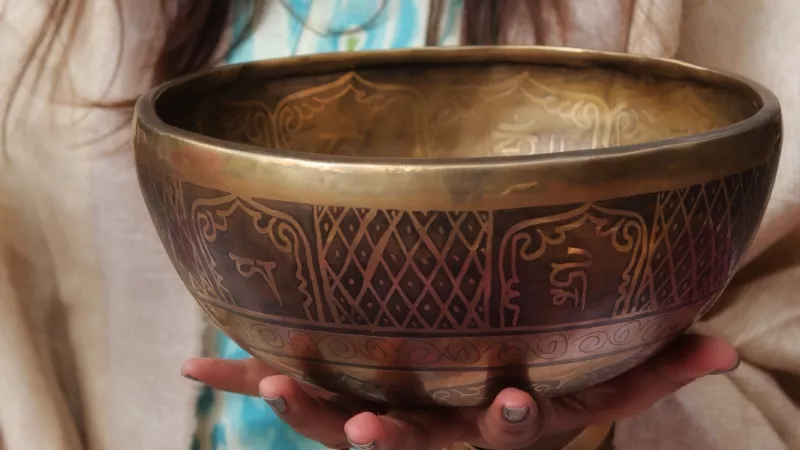
“Sound bath” has become one of the more visible wellness terms in recent coverage, often alongside images of gongs and singing bowls in dim, candlelit rooms. It’s worth separating the aesthetic from what the practice involves.
Despite the name, there’s no water involved: “bath” refers to being immersed in sound, the way you’d be immersed in water. A practitioner plays instruments (often Tibetan singing bowls, sometimes gongs) while participants lie down and simply receive the sound, without any active participation required.
Part of the appeal is accessibility: unlike meditation, which asks something of the participant (sustained attention), a sound bath asks nothing: you lie down, and the experience happens around you. For people who find stillness or seated practice difficult, that’s a meaningfully lower barrier to entry.
A sound bath is a wellness practice, not medical care. It is a pause, offered in a calm setting.
Sound baths as typically described in wellness media are group experiences. At Arna Holistic Wellness in Mauritius, the closest local equivalent is offered as a private, one-to-one session, the Tibetan singing bowl sound bath, which trades the group atmosphere for a session tailored specifically to you.
Share the wellness wisdom with your friends and community.
A sound bath is a guided rest built around sound, often from Tibetan singing bowls. Here’s what a session looks like.
Curious about Tibetan singing bowls? Here is what a session involves, what you hear and feel, and what to expect.